"Has anyone got any information and/or images of Chyandour to share?"
- Paul Mason at
buryanpaul@yahoo.com

Chyandour: East of Penzance

by Paul Mason

Gateway to Penzance and beyond

Visitors to Penzance arriving from 'upcountry' almost invariably enter town on the eastern side, either by the A30 road or by train, where they get a brief glimpse of Chyandour, a little village on the outskirts of town. 


Chyandour Square, Penzance
(Google Streetview 2021)

The borough of Penzance used to marked by boundary stones, the western one being in Alverton, and the eastern one being placed on the pathway at Chyandour Cliff, inscribed with the year, 1687. Today it still stands on the pavement in front of number 8 Chyandour Cliff, next door to Royale Court (formerly Hotel Royale).

1809 OS map - Chyandour
Ordnance Survey map  1809
Chyandour shown as Chyandower

The name Chyandour (or Chyandower) is Cornish and means 'House by the Stream' - with 'chy' meaning 'house', 'an' meaning 'the', and 'dour' meaning 'stream or water'.

Chyandour is an old established village that sits beside the Chyandour Brook, a stream which runs down the picturesque Chyandour Coombe from Madron and Treneere. 

Though the village is nowadays predominantly residential, a century or so ago Chyandour was a thriving industrial area and profitable too, with one family in particular benefitting - the Bolithos - who moved to the Penzance area in about 1760.

'The Bolithos are truly Cornish: early records of the family are derived from Wendron, Helston, Penryn, Launceston and Liskeard.'
https://bolithoestates.co.uk/history-2/

Thomas Bolitho (1740–1807) was married to Catherine Johns (1737–1821) who gave birth to two sons, Thomas Bolitho (1765–1858) and William Bolitho (1773-1856).

Thomas Bolitho (1765-1858) - portrait painting
Portrait of Thomas Bolitho (1765–1858)
(copy of oil painting by anonymous artist)

In 1802 Thomas Bolitho (1765-1858) the son of a tanner, married Maria Harris (1781-1853)  and became father to three sons, Edward  (1804-1890), Thomas Simon (1808-1887), and William (1815-1895), and six daughters, Mary, Elizabeth, Maria, Frances, Emily and Catherine.
https://ancestors.familysearch.org/en/KHLW-GTL/thomas-bolitho-1765-1858

Thomas's brother, William Bolitho (1773-1856), in 1798 married Phillipa Foster (1778–1845) who bore him a son, Richard Foster Bolitho (1799 - 1882). After the passing of Phillipa
in 1845, William then married Mary Dennis Rock (1793-1853), and subsequently on her passing in 1853, he married Ann Gordon Withers Henwood (1822-1900).

Tracing the fortunes of his family, Colonel Sir Edward Bolitho OBE explained:
'They were originally tanners but under Thomas Bolitho (1765–1868) they became merchants supplying materials of all types to the fishing and metal mining industries. They went on to become one of the four main families engaged in tin smelting and owned the Chyandour Works at Penzance along with interests in several mines. As the smelters paid the miners only after the tin was sold and received immediate payment on their sales, they had a strong positive cash flow and expanded their activities into banking. Bolitho's Bank (later the Consolidated Bank of Cornwall) acted as financiers to the Cornish mining industry and were eventually acquired by Barclays in 1905.'
https://nmrs.org.uk/wp-content/uploads/2024/08/08-2024.pdf

Officially, Chyandour lay beyond the boundary with Penzance and was therefore not subject to local taxes and duties. Chyandour was close enough to have a clear view of Penzance but sufficiently far away to have an identity of its own.

According to the Pigot Directory of Cornwall of 1823, there were but two businesses being carried out in Chyandour:

'TAVERNS AND PUBLIC HOUSES.  Copper Tin & Fish, Wm. Weymouth, Chyandour., Three Tuns, Thos. Smith, Chyandour'

But that would be to overlook the Bolitho family, who lived and worked in Chyandour, and are also listed as having multiple business interests:

'BANKERS.  Bolitho, Sons & Co.
MERCHANTS.  Bolitho Thos & Sons,
SHIP OWNERS.  Bolitho Thos. & Wm
TANNERS.  Bolitho & Co.
TIN SMELTERS.  Bolitho & Co.'

http://west-penwith.org.uk/pigot23.htm#penzance

Unfortunately though, it seems the local workers in Chyandour lived in poor conditions back then.

'In 1825, and for many years after, the houses at Chyandour were very small and dilapidated. The two large houses now occupied by Mrs. Trevithick and Mr. Milton were built about this time; the granite house next to Mrs. Trevithick’s was for many years one of the best lodging houses in this neighbourhood. On the other side of the road opposite the granite house was a good-sized garden, now taken away to make room for the railway. Between these houses and Penzance were on the right hand fields, and on the left a hedge; seaward of the hedge the ground sloped down to the beach.'
http://west-penwith.org.uk/pz1.htm


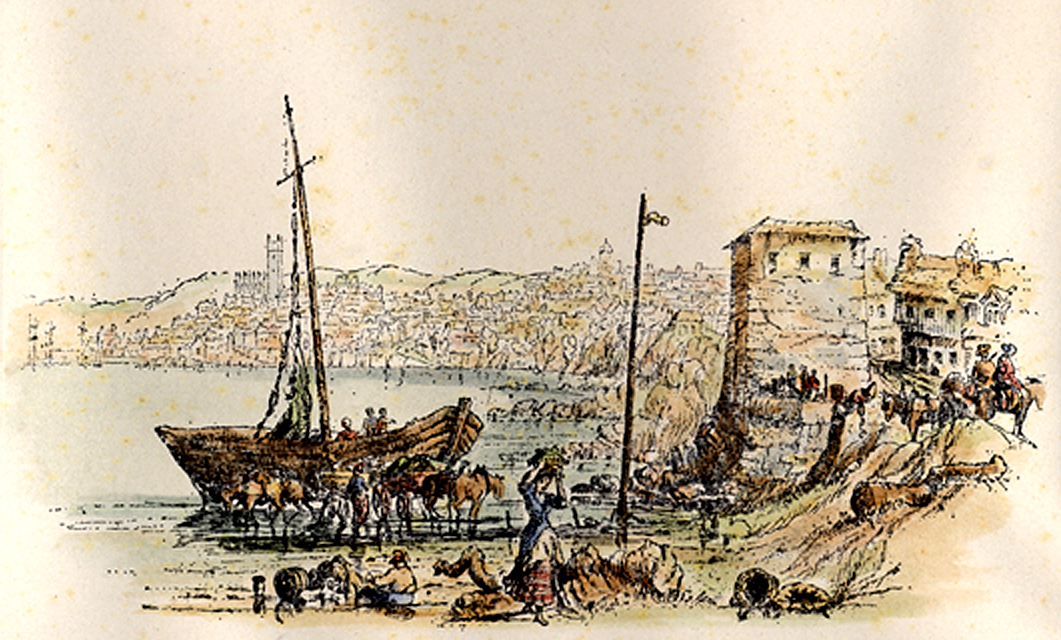
View of Penzance from Chyandour Cliff J S Prout
View of Penzance from the Cliff at Chyandour
(print of drawing of John Skinner Prout 1838)

c1840 A Scobell Penzance from Chyandour
View of and Penzance from Chyandour 
(print of a drawing by A Scobell c1840)

History of Chyandour
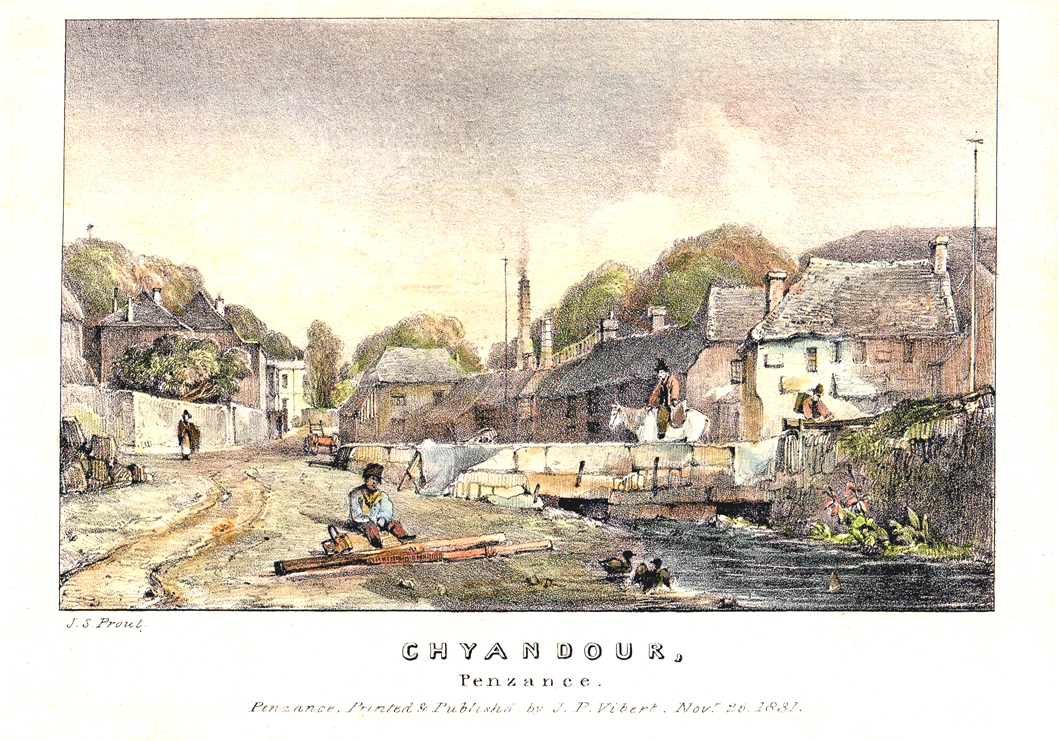
The tiny village of Chyandour is centred on Chyandour Square with its several rows of old cottages.

Chyandour, Penzance - J S Prout
Chyandour, Penzance
(print of etching by John Skinner Prout, 1831)

Dawson's Parish Map, Penzance 1832
Dawson's Parish Map, Penzance, 1832
with Chyandour shown as Chyandower


The Pigot's Directory of  Cornwall for 1844 offers an interesting glimpse into the diversity of businesses operating in Chyandour then:

'BASKET MAKERS.  Jewell John, Chyandour., Stevens James Kingston, Chyandour.
BLACK & WHITE SMITHS. 
Grose Richard, Chyandour., White Nicholas, Chyandour.
BOOT & SHOE MAKERS.  Denithorne William, Chyandour., Way William, Chyandour.
CARPENTERS AND JOINERS.  Pellew Thomas, Chyandour.
MERCHANTS.  Bolitho Thomas & Sons, Chyandour.
MILLINERS & DRESS MAKRS.  James Elizabeth, Chyandour., Kinsman Ann, Chyandour.
PAINTERS & GLAZIERS.  Kinsman Josiah, Chyandour.,
Lewin[?] John, Chyandour.
SHOPKEEPERS & DEALERS IN GROCERIES & SUNDRIES.  Bridgman William, Chyandour., Friggins Humphrey, Chyandour., Necervess[Nankervis] John Vingo, Chyandour.
STRAW HAT MAKERS.  Pellew Selina, Chyandour.
TANNERS.  Bolitho Thomas & Sons, Chyandour.
TAVERNS & PUBLIC HOUSES.  Copper, Tin and Fish Tavern, Thomas Warren, Chyandour., Three Tuns, William Tredren, Chyandour.
TIN SMELTERS.  Bolitho Thomas & Sons, Chyandour.'

https://west-penwith.org.uk/pzp442.htm

'On the 9th September 1846 Prince Albert stepped ashore at Penzance. The pier had been carpeted in red in anticipation of his arrival and the mayor and other dignitaries were there to greet him. The Queen and the Prince were visiting Cornwall on the Royal Yacht with their children and had already stopped at Falmouth and then paid a visit to St Michael’s Mount, but on that day the ever curious Albert was interested in seeing some of the industry of the area.
After observing the formation of a block of tin at the Chyandour Smelting Works and being presented with some samples of the precious Cornish ore, the Prince went on to visit the Geological Rooms on North Parade.'

https://cornishbirdblog.com/the-ruins-of-poltesco/

Penzance map, 1851
Penzance map1851
Chyandour is indicated by not named


Chyandour - main square, corner shop and Rowe's 3 Tuns Hotel, c1860
(a 'tun' is an old-fashioned term for a barrel)
(photograph)

Contained in the Coulson's Directory of 1862 is a listing of local residents and their trades:

'Chyandour Cliff.
Edwin Sherman Polkinghorne, Esq., Francis Trevithick, Esq., John Berryman, Coachman., Mrs. Thornton., Jacob Corin., Barzillai Beckerleg, Mastermariner., Mrs. Griffen., Richard Hall, Labourer., Mrs. Trounson., Charles Ladner, Shoemaker., William Hitchens, Labourer., John Perry, W. C. R. [West Cornwall Railway], James Kingston Stevens, Basket-maker., Miss Barnicoat., George Brewer, Labourer., Thomas Hall, Tin-smelter., Richard Roliston, Butler., John Harris, Engineman W. C. R., Mrs. Penrose., Miss Mann, Needlewoman., Samuel Hocking, Labourer., James Bennetts, Guard W. C. R., Michael Perryman, Shopkeeper., Mrs. Eathorne., John Allan, Labourer., John Richards, Guard W. C. R., William Gilbert, Shopkeeper., John Escott, Guard W. C. R., John Tucker, Labourer., William Pengelly, Basket-maker., William Uren, Labourer., Mrs. Hicks., William Oliver, Labourer., Richard Martins, 
Labourer., Mrs. Rogers., William Rowe, Labourer., Miss Baragwaneth., James Couch, Shoemaker., Richard Hall, Labourer., John Lovell, Tanner., William Matthews, Labourer., Richard Denithorne, Tanner., James Trewern, Tanner., James Denithorne, Labourer., Samuel Ridgeman, Labourer., Richard Denithorne, Labourer.

Chyandour.
James Denithorne, Tanner., Peter Ley, 
Tanner., William Rundle King, Innkeeper., Mrs. Friggens, Shopkeeper., George Pellew, Labourer., Mrs. Jeffery., John Bridgeman, Labourer., Charles Rowe, Labourer., William Bridgeman, Labourer., John Edwards, Labourer., James Trewhella, Labourer., Richard Mildrum, Labourer., Frederick William West, Sergeant C. C. C. [Cornwall County Constabulary], James Lovell, Tin-smelter., William Matthews, Tanner., Richard Hocking, Tanner., Edward Hocking, Tanner., William Jenkin, Tin-smelter., Richard Mann, Tin-smelter., William Tredrea, Innkeeper., William Barnicoat, Tanner., Thomas Matthews, Tin-smelter., David Eddy, Labourer., James Ferrell, Hind [servant]., John Squance, Coachman., Richard Marrack, Accountant.

Chyandour Terrace.
1. William Bottrell, Carrier., 2. James Curtis, Coachman., 3. James Rowe, Tin-smelter., 4. Nicholas White, Blacksmith.'

http://west-penwith.org.uk/coulson2.htm#C


Coombe House, The Coombe, Chyandour
(Google Streetview April 2026)


Nestled to the western side of Chyandour Coombe stands Coombe House, once the residence of the Bolitho family.

In fact Coombe House is not one house but three houses conjoined, the right part appearing to be the oldest, the middle part dating back to the 18th century, and the left side (with a walled lawned garden ranging from the side of house) being early 19th century. After Coombe House ceased to be the Bolitho family home it is said that the property was eventually converted into flats.

Across the lane is a fast running freshwater stream that flows down Chyandour Coombe to the sea. Almost immediately opposite the old stables is a building known as the Tannery Barn.


Tanning Barn, The Coombe, Chyandour
(Google Streetview July 2023)

Chyandour Brook passes directly under the Tanning Barn, and until a century or so ago was an important part of a large tanning operation.

The tanning operation at Chyandour was mentioned in a report from 
The Cornishman newspaper, No. 442. 30th December 1886, page 4:
'The tanning pits in the tanning yard and tens of thousands of pounds' worth of cured hides were removed in 1886. The yard was made into a "shrubbery".'
https://en.wikipedia.org/wiki/Chyandour

It is likely that the tanning process had contaminated the ground with chemicals, so the decision not to develop the site sounds a good one.


Tin Smelting in Chyandour


After the tanyard ceased operation, Chyandour Brook continued to serve local industry in the form of the large tin smelting works closeby.

Back in around 1660 John Tremenheere set up a tin smelting works at Chyandour, and by 1760, when Thomas Bolitho arrived from Penryn, the operation was being run by the Praed family. 

'In 1850, the freehold of the Chyandour Smelting Works was bought by the [Bolitho] family and, in 1877, they acquired a joint use in the Trade Mark of “Lamb & Flag” for marking blocks, bars and ingots of tin.'

https://bolithoestates.co.uk/history-2/
Lamb & Flag tin stamp - Chyandour
Ingots of tin were produced at Chyandour and stamped with the company logo, the image of a Lamb & Flag

Chyandour tin smelters
Workers at the Chyandour Tin Smelting Works  c1907
(photographer unknown)

'In 1883 the smelting works was the largest of nine in Cornwall covering 4 acres (1.6 ha) to 5 acres (2.0 ha). It consisted of a number of long, one storey, slated buildings with several chimneys belching smoke and flames. There were four furnaces which were built of brick 18 inches (460 mm) thick and clamped with iron bands. Each lasted five to six weeks, when it required rebuilding. Fifteen men worked twelve hour shifts, with nights every other week, for 19 shillings a week. The tin ore was stored between large wooden barriers (known as hutches) with each compartment storing differing qualities. The ore came straight from the mines, or from "valuable" Australian stream ore (containing 75% tin), or low quality ore from the "Red River". The ore was heated and the tin flowed into cast iron crucibles where it was re-heated to remove impurities. It was then ladled into bars, blocks, ingots, etc., which weighed from one pound to a hundredweight or more. A small iron slab with Messrs Bolitho's trade mark was laid on the molten tin to leave an impression and the tin was shipped within this country or exported to Russia, America, etc.
Anthracite was brought in by sea, the ships landing on the beach near the mouth of the Chyandour Brook, which was outside the boundary of Penzance and hence they did not have to pay harbour dues. The cargo was carried through the three tunnels under the railway line and hauled up the slipway to the smelting works.'
https://en.wikipedia.org/wiki/Chyandour

Consolidated Tin Smeltling Co Ltd - Chyandour
Consolidated Tin Smelting Co. Limited, Chyandour
(photographer unknown)
Bolitho Estate Office
Bolitho Esate Office, Chyandour Square
Bolitho Estate Office, Chyandour Square
(to the left of estate office is the former Penzance Police Station)
(photographer unknown)

'Still in use, the Bolitho Estate Office was built in 1860, and at that time the first floor was a bank with the vault under the caretaker's ground floor accommodation. Wagon drivers would stop at the bank to collect their money before driving up Chyandour Coombe to the smelting works.'
https://en.wikipedia.org/wiki/Chyandour


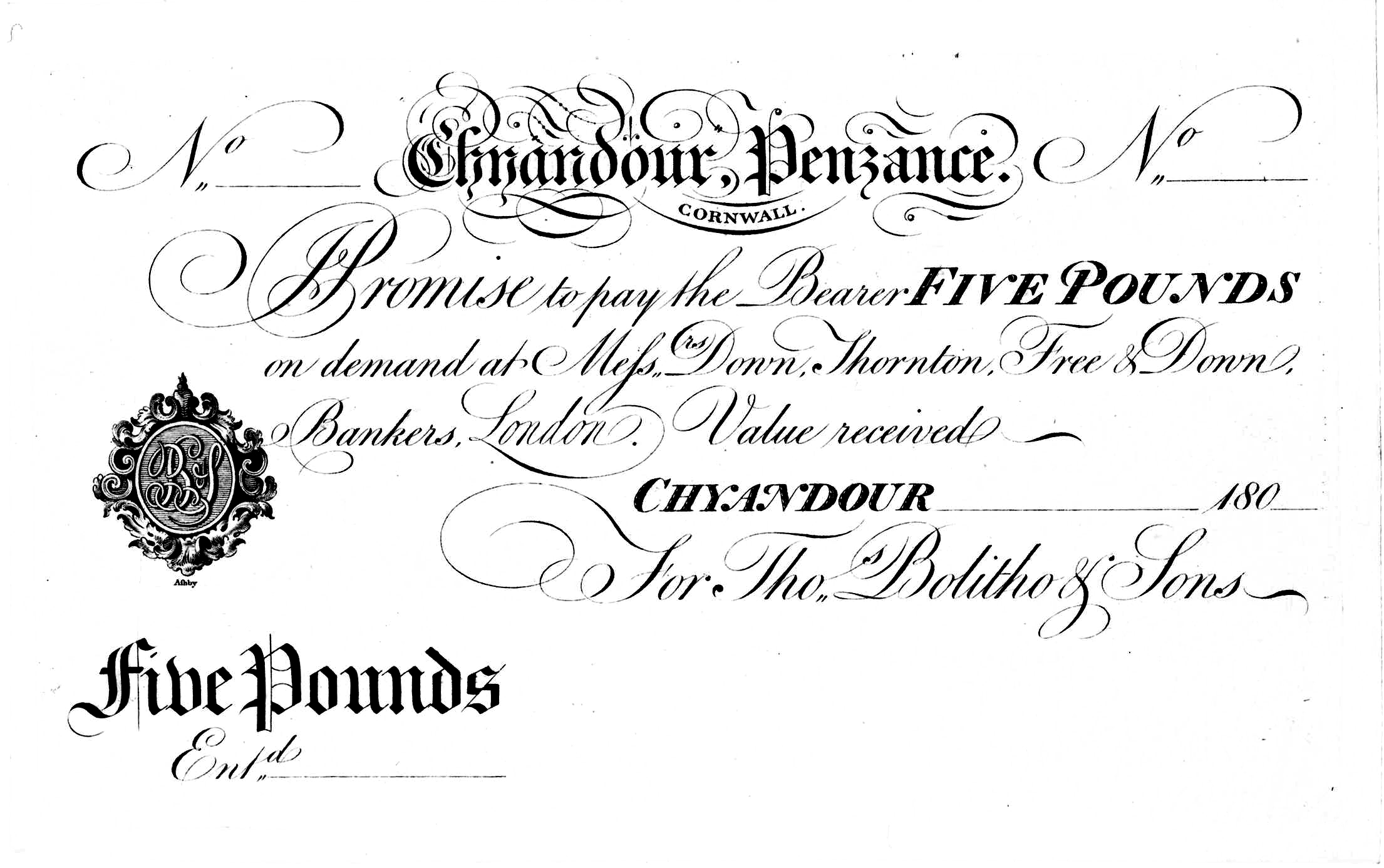
Bolitho Estate Office in Chyandour was built as a 'counting house', and stands as testament to those days when carts laden with tin would arrive at the counting house in Chyandour Square. The building also performed the function of a bank, sometimes providing loans, eventually leading to the formation of the Bolitho, Williams, Foster, Coode, Grylls & Co. Limited (Consolidated Bank of Cornwall).


A cheque issued by Bolitho, Williams, Foster, Coode, Grylls & Co,, Limited
Consolidated Bank of Cornwall, Penzance


'Established in 1889 with the merger of Bolitho, Sons and Co (Mount’s Bay Bank) and Robins, Foster, Coode and Bolitho (East Cornwall Bank). Head office in Penzance. Acquired by Barclay & Co. Ltd. in 1905.'
https://banking-history.org.uk/record/bolitho-williams-foster-coode-grylls-co-limited-consolidated-bank-of-cornwall/

Procession through Chyandour Square
Procession passimg through Chyandour Square
possibly 
coming from Gulval
Methodist Church Sunday School and celebrating a 'Tea Treat'
(photographer unknown) 

At the road junction of The Coombe and Chyandour Place was carpenter's workshop and the local blacksmith's smithy.

Carpenters workshop and Smithy, Chyandour
The corner of Chyandour Coombe & Chyandour Place
- on the left is the bark mill (for grinding bark to extract tannin, for tanning);
on the right, a carpenter's workshop, a storage facility and a house, & at far right, the blacksmith's smithy.
(photographer unknown)

Road junction of Coombe and Chyandour Place
Road junction of The Coombe and Chyandour Place
(Google Streetview June 2009)

To the left of the road junction lies Chyandour Coombe, and to the right Chyandour Place (and Chyandour Terrace), which until 1989 carried vehicular traffic on its way to Gulval, but is now a cul-de-sac.


Penzance and the arrival of the railway

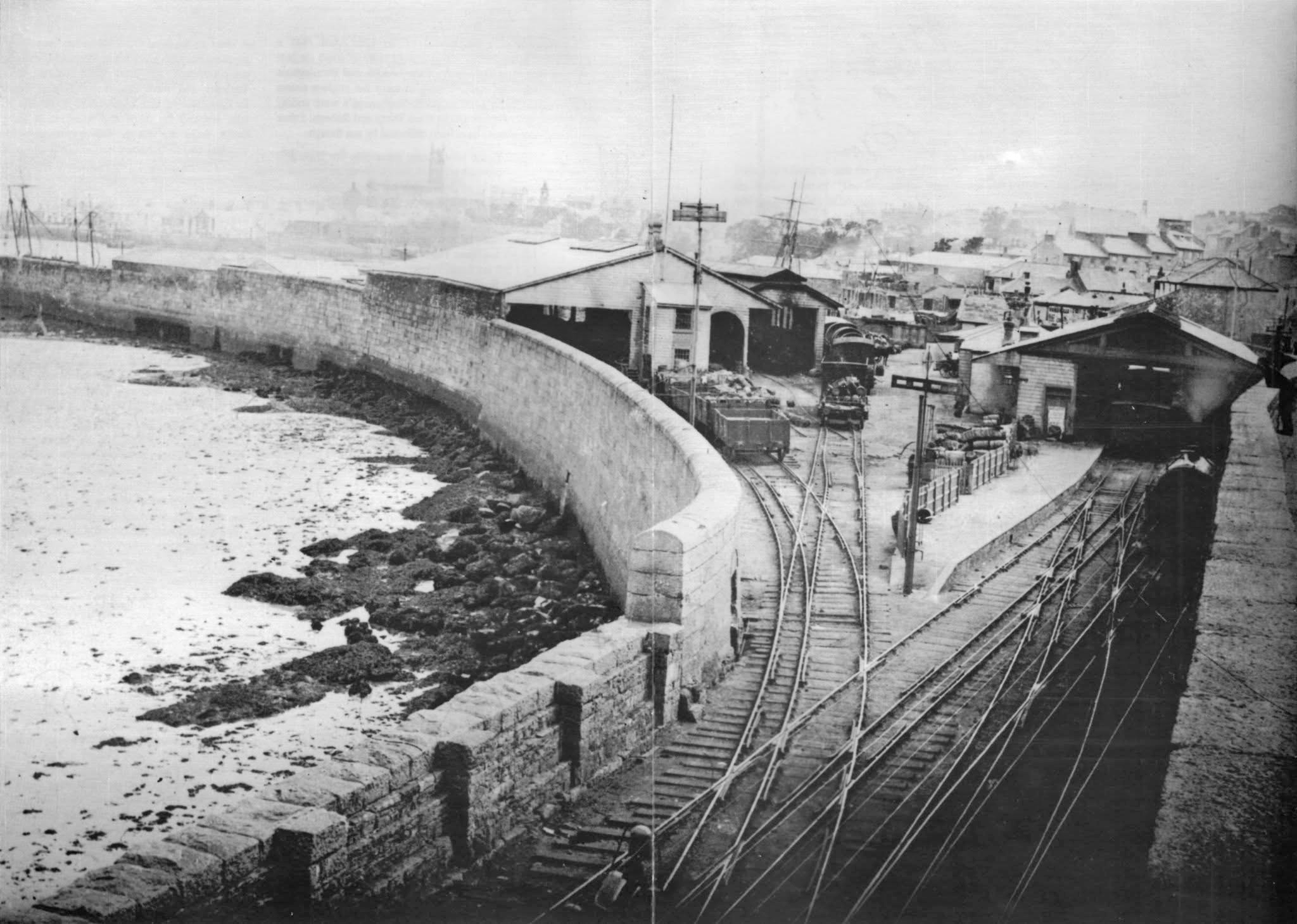
With the successful expansion of rail networks to Cornwall, plans were made to extend the broad gauge tracks to Truro and Penzance, and provision had to be made for refuelling of coal, replenishing of water, and the the installation of
turntable so any steam locomotive that had brought a train of coaches to Penzance could be turned 180 degrees so that it could pull the train back up the track again.

According to an old OS map, there was once a row of properties on the southern side of the Penzance road opposite Chyandour Cliff, but these seem to have been demolished, presumeably to give over space over to operations of the proposed railway. 

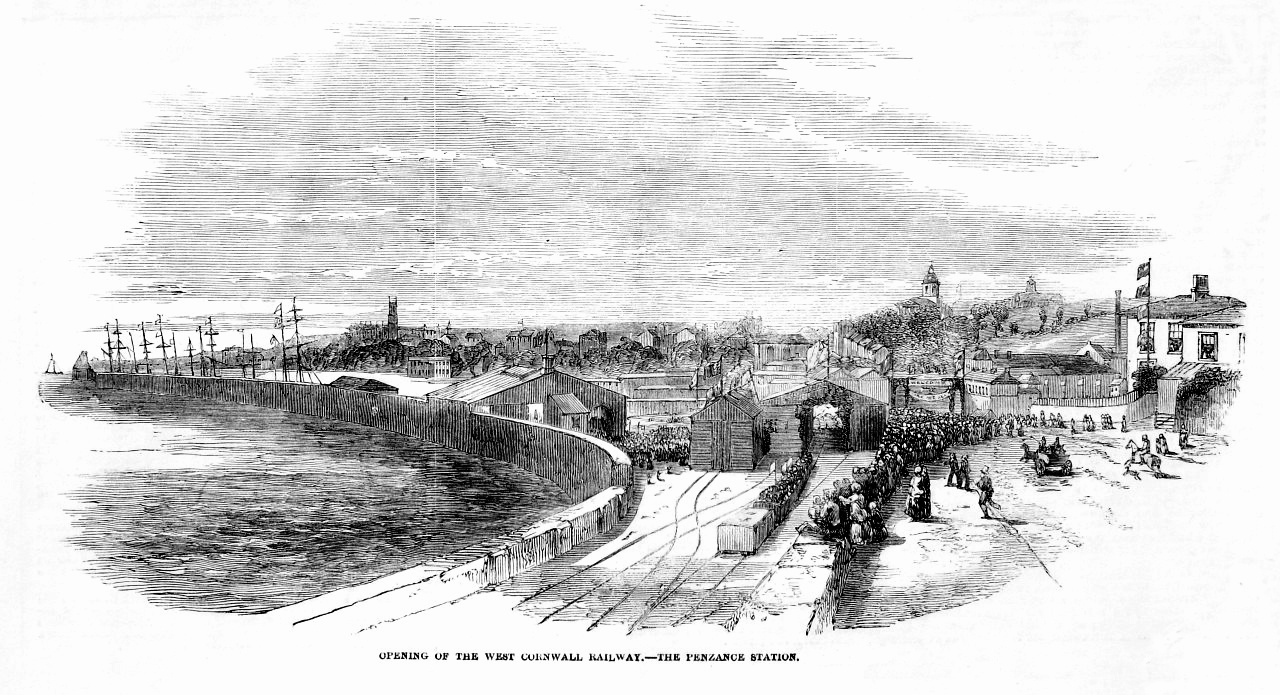
'On August 26th 1852, the West Cornwall Railway opened its line between Penzance and Truro – and with it a station at Penzance, where the travelling public would reach the seafront terminus. The town was fully decorated for the occasion, with arches over the main thoroughfares and houses, and shops decked out with greenery.  Mayor Richard Pearce and various other VIPs had made an early start for Truro – and by midday the town was ready for their ceremonial return.

The railway had actually been operating out of the station building since March, providing passenger and goods trains as far as Redruth, but the official celebration was put off until the line through to Truro was completed. Everyone who lived within the Borough could now board within 20 minutes’ walk of their homes, and arrive in Truro less than two hours later. But more important was the speedy carriage of perishable produce – and quicker communication by means of letter post and newspapers. The passenger traffic was just a welcome extra.  Hence the importance of the site – adjacent to Albert Pier, where cargoes could be transferred from ship to shore to railway train.'
https://www.penwithlocalhistorygroup.co.uk/the-penwith-papers/?article=All+Change%21&id=49


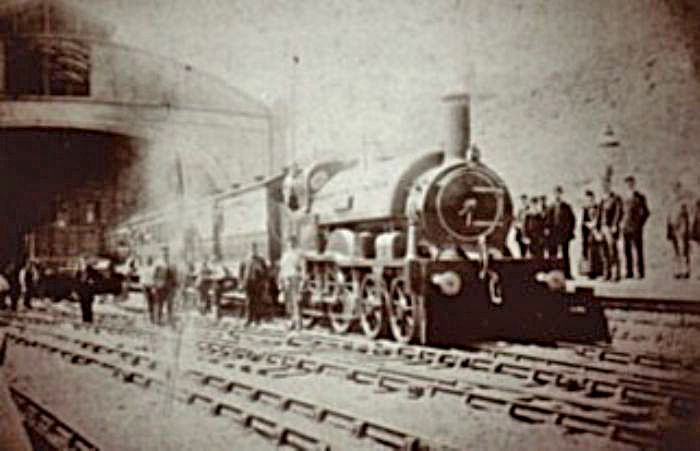
The Cornishman express train passing Chyandour
The Cornishman
a broad gauge (pre-1892) G.W.R. engine pulling an up train from Penzance to Exeter,
passing through Chyandour & Ponsandane
(photographer unknown)
(an artistic colour interpretation of this image was later reproduced in 'The Boy's Own Paper')
Cornishman Express steam train

'Through trains from London Paddington to Penzance began running on 1 March 1867 and included fast services such as the 10:15 Cornishman and 11:45 Flying Dutchman, but these still took nine hours or more for the journey.'

'A new express service with limited stops was promoted by the GWR, commencing on 1 July 1904. It left London at 10:10 and was timed to reach Penzance at 17:10 running to Plymouth in 4 hours 25 minutes, a cut of 28 minutes on the previous fastest service. It conveyed six carriages to Penzance, including a dining car, and one more carriage for Falmouth that was detached at Truro then added to a branch train to complete its journey. Other stops were made at Plymouth North Road, Gwinear Road (for the Helston branch), and St Erth (for the St Ives branch).'

https://en.wikipedia.org/wiki/Cornish_Riviera_Express


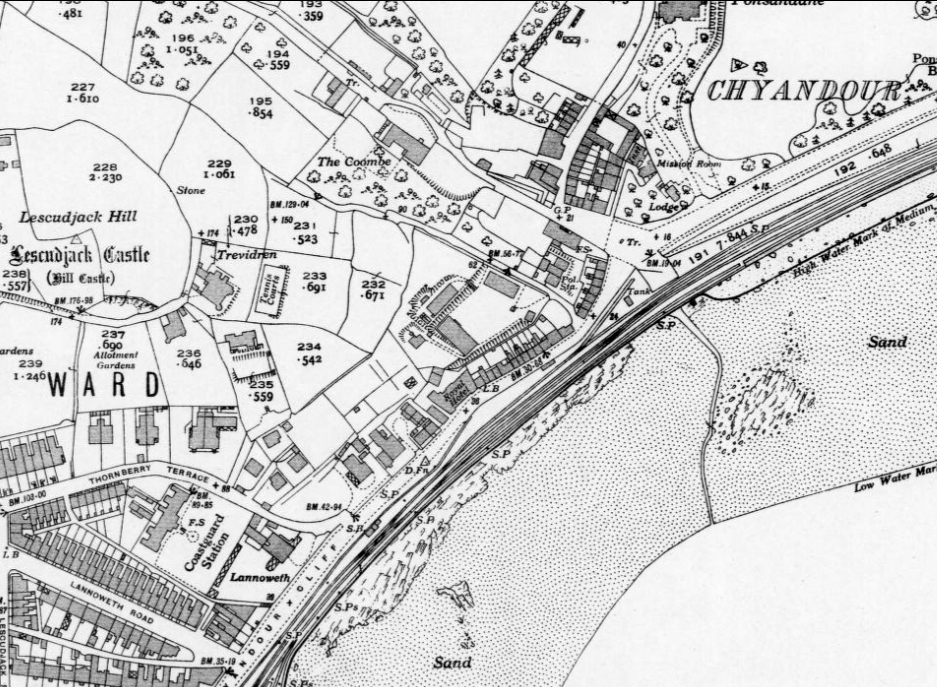
OS map of Chyandour c1875
OS map of Chyandour  c1875

OS map - Chyandour c1895
OS map of Chyandour c1899
P.O. = Post office, marked at 18 Chyandour Cliff
W.T. = Water Tap, marked in Chyandour Place


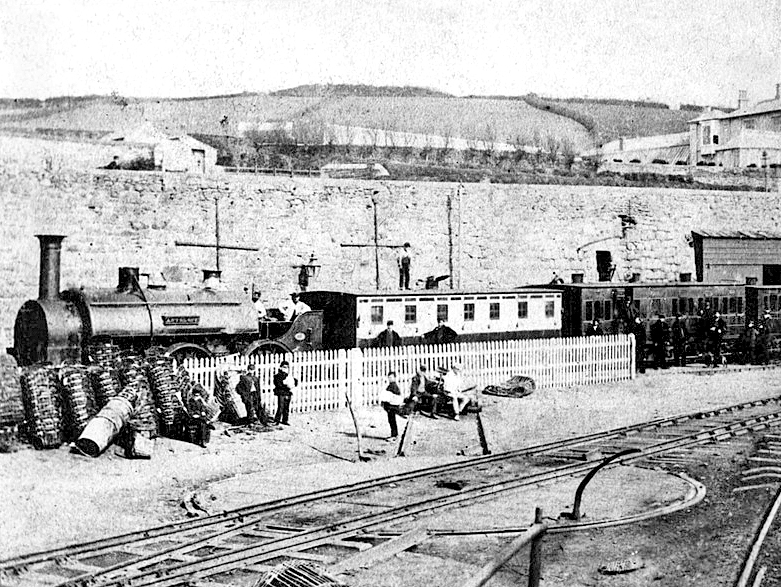
Chyandour rail depot
View of engine shed,
coaling stage, watertower etc, and steam locomotives (the loco to the right probably on turntable)
adjacent to Chyandour Cliff
(photographer unknown)

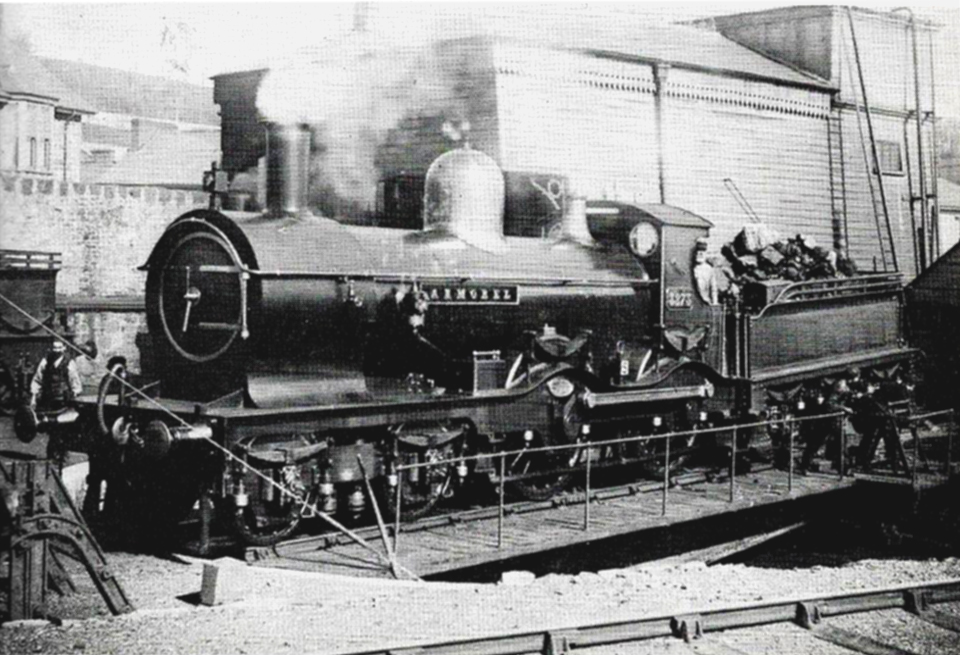
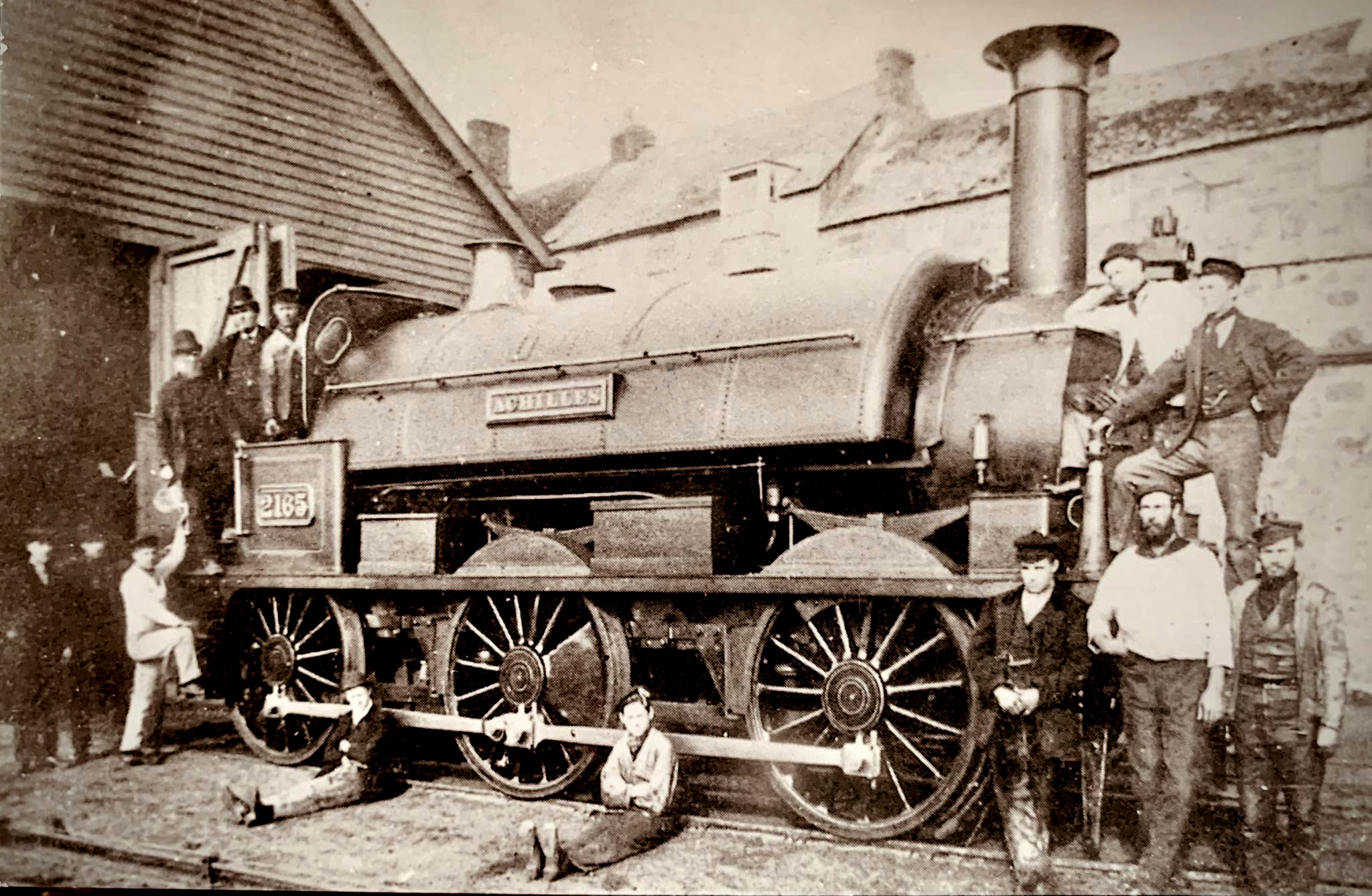
Steam locomotive - Chyandour shed
Engine Driver and Fireman standing on the footplate in the cab of a steam locomotive
outside Chyandour engine shed
huge heap of coal visible to right of photo
(photographer unknown)

Rail depot at Chyandour
View of Chyandour from Ponsandane, looking west to Penzance
- note the engine shed, engine, watertower and signal box to left,
and the Police Station, the flagstaff, Bolitho Estate Office, the corner shop & the 3 Tuns Hotel to right of photo -
(photographer unknown)

To the west of Chyandour Square is a row of terraced houses called Chyandour Cliff, a lane, and across the lane, in the next row of properties, was the local Post Office.

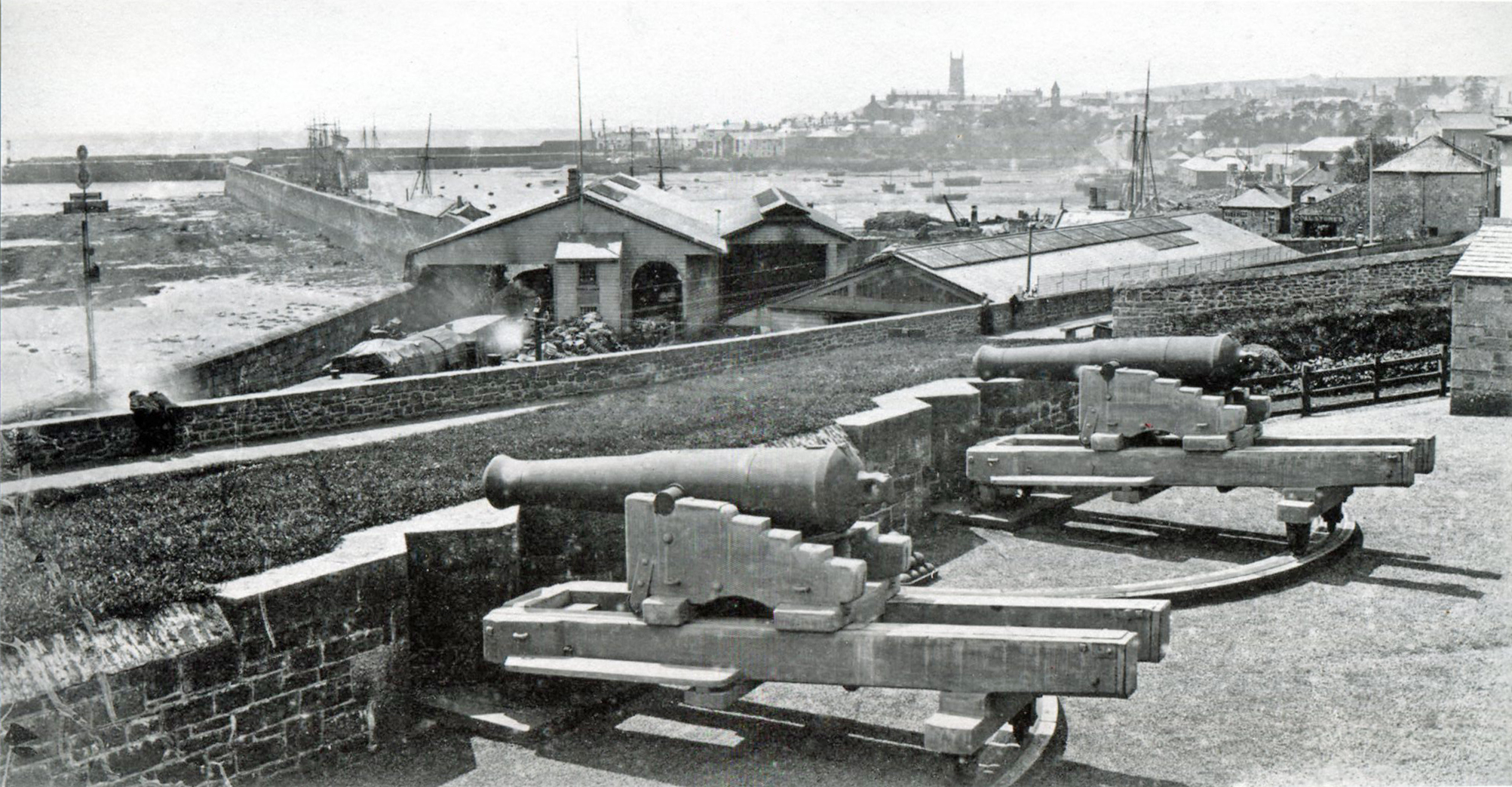
The lane gave direct acess to the tannery, and in ancient times the lane would probably have been used by local people to walk straight to Lescudjack Castle, an ancient 'round' at the top of the cliff. In more recent times Chyandour Cliff was chosen to position the local battery of cannons.

Chyandour Cliff Battery
Cannons pointed out to Mount's Bay, at the Battery on Chyandour Cliff
(photographer unknown)

View over Mounts Bay from Chyandour Cliff
View over Mounts Bay from Chyandour Cliff battery
(photographer unknown)

The commanding position of Chyandour Cliff over Mounts Bay was presumeably the main factor in deciding to site the Battery there, in order to protect Penzance from hostilities.
The battery on Chyandour Cliff was historically used by the Cornwall (Duke of Cornwall's) Royal Garrison Artillery. Chyandour Cliff was also chosen as the site for Penzance Police Station, which was built here in 1895. The Police Station has long been closed and been converted into residential housing.


The Next Generation of Bolithos

In 1830 Thomas Bolitho's son, Edward Bolitho
(1804-1890) married Mary Stephens (1802-1887) and they both went to live at Trewidden, near Buryas Bridge. In 1835 Mary gave birth to Thomas Bedford Bolitho (5 January 1835 – 22 May 1915), who became a banker and industrialist, then distinguished himself as a Liberal Unionist Member of Parliament for St Ives from 1887 to 1900.

'In 1867, Thomas Simon Bolitho, brother of Edward Bolitho of Trewidden, bought the Trengwainton Estate and the house there (near Madron).  Having created the now world-famous gardens, his grandson Lieutenant Colonel Sir Edward Bolitho gave them to the National Trust in 1961. The house, which is not open to the public, is currently occupied by his grandson Colonel Edward Bolitho OBE.'
https://bolithoestates.co.uk/history-2/

William Bolitho
(1815-1895), another of Thomas Bolitho's sons, married Mary Hichens Yonge on 28th May 1851 , and they had many children, Mary Hitchens, William Johns, Cecilia Maria, Catherine Johns, Nora, Elizabeth Maud, Loveday Wilhelmina, and William Edward Thomas Bolitho (1862-1919).The family lived for some time at Alverton Manor in Alverton whilst building works and landscaping were being progressed at nearby Polwithen House, until it was completed in 1870.
further information:
https://paulmason.info/Alverton/history.htm


Pendrea and Ponsandane

Closeby to Coombe House, a little way up the Gulval road, lay two estates, the first being Ponsandane, belonging to 
William Bolitho (1773-1856), and the other, called Pendrea, occupied by the St Aubyn family.

Ponsandane is a Cornish name meaning, 'The man's bridge' - 'pons' meaning 'bridge', 'an' meaning 'the', and 'dan' meaning 'man'.

After the passing of William Bolitho (1773-1856), his only son, Richard Foster Bolitho (1799 - 1882) took up residence at Ponsandane.

Richard Foster Bolitho (1799 - 1882), had been married to Amelia Sage Ley (b 1800 , d 1886) since 1829 and together they had been blessed with three children; namely, William Bolitho (1830-1894), Sage Ley Bolitho (b. 22 Sep 1838; d.20th December 1916) and Richard Foster Bolitho (b. 15 Sep 1840 d 20th January 1932) who all lived at Ponsandane.

Ponsandane Field flood
Ponsandane House - overlooking flooded field  c1895
(photograph Gibson, Penzance)
Ponandane Field flood


A quote from The Cornishman newspaper, Thursday 6th December 1894, page 5:

'William Bolitho: Your Final Day
You may not know it, Mr William Bolitho of Ponsandane. More comfortable for all concerned, indeed, if we assume that you do not. But today is your final day.
The Cornishman, in its next issue, will help us to conjure you: a man of “robust appearance and active habits of mind of body”. True, the medical men have been in attendance for some time. And the surgeon George Millett has of late been invited along on your annual “six weeks' Continental trip”– partly for company, yes, but always ready to step into his professional role and forestall any attack of your old trouble. You’ve left him £500 in your will, along with other worthy bequests: £500 to the Royal Geological Society of Cornwall, with which you have a long-standing connection; another £500 to the Library in Morrab Gardens to spend on books costing at least £2 10 shillings apiece; the same amount again for a “memorial window or silver or brass tablet” to be placed in Gulval church. And the exterior of the church? A handsome £1,000 for its “maintenance and beautifying”, along with the upkeep of your new Bolitho Memorial Chapel. Generous, yes: but it will hardly leave a dent in the £188,283 value of your estate.
But all this talk of bequests is surely premature. There has been no cause for alarm; no fear of the “fateful termination”. You have been attending to your work, both public and private, as is your custom. And today, after feeling a little seedy earlier in the week – a little below par - you seem “better than for some time”. You’ve paid a visit – at your “usual hour” – to the Consolidated Bank of Cornwall, of which you are the “active general manager”. At the Bank you’re the man to go to now that your brother, Robert [Richard] Foster, has grown so deaf. It has fallen to you to manage the investment of five million pounds.
In fact, you’ve been out and about most of the day. But the “insidious and weakening disease” has been working its will inside you, and will claim you before the winter dawn breaks over the Bay.
What are your thoughts as you bid goodnight to your brother and sister Robert [Richard] and Sage, and the household staff? As you retire to the land of sweet repose? Are you looking forward to taking your place at Gulval Church in the morning, head of the Ponsandane branch of the family? Are you confident - serene? Or are there any qualms – any foreshadowings? Impossible to know.
And tomorrow? Advent Sunday? The church service will go on. The restoration in which you took such an interest , the newly-built Bolitho chapel with its “chaste adornment” will provide eloquent testimony to your generosity. But no, Mr Bolitho, you will not be in your place. For when your butler, Mr Bartlett, knocks on your door at 8.00, and again at 8.15, there will be no reply.
How will you be remembered? As a “quiet but a shrewd observer”, with a “kindly nature”; a “prompt and generous sympathiser “ in cases of “genuine need”. To the poorest, you would give ear. In business, you would bring calm in place of strife. You had – to the knowledge of the Cornishman - no enemies.
In due course you will be interred in the churchyard at Gulval where – in the fullness of time – your unmarried siblings will follow. And what will the future then hold for the big house at Ponsandane?'

https://www.penwithlocalhistorygroup.co.uk/on-this-day/?id=299


Corner shop and 3 Tuns Hotel, Chyandour
(photographer unknown)

Corner shop at Chyandour
The corner shop and the 3 Tuns Hotel on the main road to Eastern Green
(Postcard Stengel & Co,. Ltd E31917)


Up until the late 19th century Chyandour Square was densely populated, then it was decided that some of the buildings were no longer fit for purpose and were demolished. In there place a cluster of part-timbered properties were built in the style of Arts & Crafts movement, including an 'Institute' and a 'Mission Room',  the one presumably providing literature and education, the other used for meetings and worship. It is said that the institute was given by Sage Ley Bolitho of Ponsandane House. Interestingly, a blocked up doorway has been discovered in the wall behind the former Mission Room, with a pathway from it leading into the grounds of Ponsandane.

Arts & Crafts buildings and corner shop at Chyandour
The corner shop, Chyandour
(photographer unknown)
To the left of the photo are two buildings built in the style of the Arts & Crafts movement;
it is evident that the building on the far left is a public building as there ventilators on the roof.
To the centre of the photograph one can see a man in an apron working upstairs in the millers stores

The house trough in Chyandour Square
IN MEMORY OF 
LITTLE SIMON BOLITHO 
WHO PASSED THIS WAY 1905 - 1910

'The drinking trough was erected in memory of Simon Bolitho who died in 1910 at the age of four and a half. He was the youngest son of Colonel William Edward Thomas Bolitho of York House, Penzance and Hannaford, Ashburton, Devon.'
https://artuk.org/discover/artworks/little-simon-bolitho-drinking-trough-286554

A decision was made i
n about 1911 to shut down the local shop and the 3 Tuns Hotel, presumeably on account of the closure of the tin smelting works and the transference of the engine shed to Long Rock, which must have resulted in a significant reduction of potential clientele. Soon after their closure, the shop, hotel, and the commercial buildings at the back of it, were demolished, with the resulting space being incorporated into the garden area of Ponsandane Lodge.

When William Bolitho of Ponsandane had died in 1894, his sister, Sage Ley Bolitho, became the beneficiary of a significant Trust Fund, permitted to live off the interest of a £25,000 capital sum, and was therefore able to donate a village hall to the people of Gulval. Sage laid the foundation stone of Gulval Village Hall on May 30th 1914.

Sage's brother, R F Bolitho of Ponsandane, was also known for his various acts of generosity,
such as donating the Penzance steam fire engine,  installing a granite drinking trough in Gulval, marked 'for the thirsty cows and public', donating the Penzance Promenade bandstand, creating the formal gardens in Western Green in Penzance, and building the Garlidna Almshouses on Tremenheere Road, Penzance, Cornwall, the foundation stone having been laid by his sister Miss Sage Ley Bolitho .


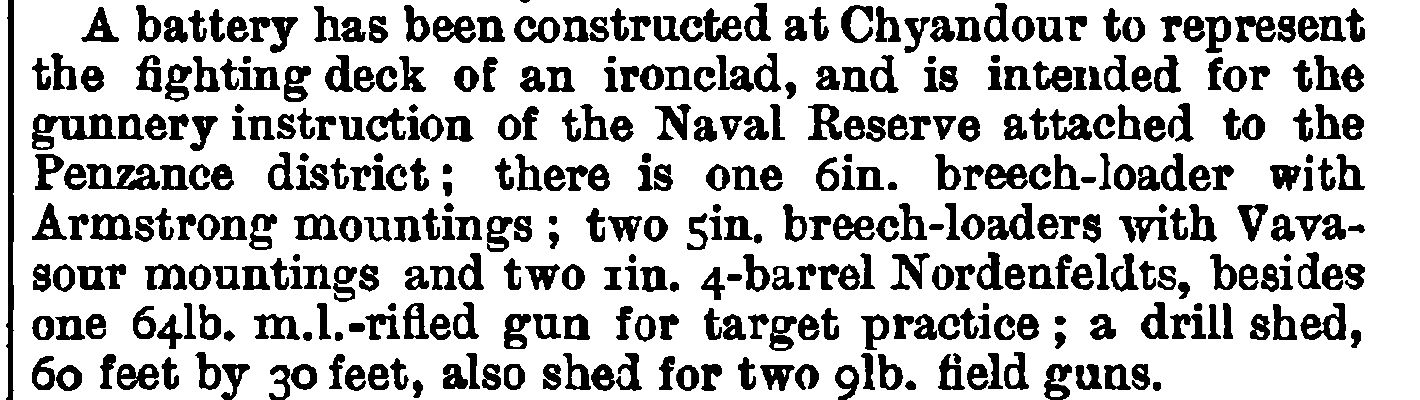
The Kelly's Directory for Cornwall of 1914, p277, mentions the battery at Chyandour:

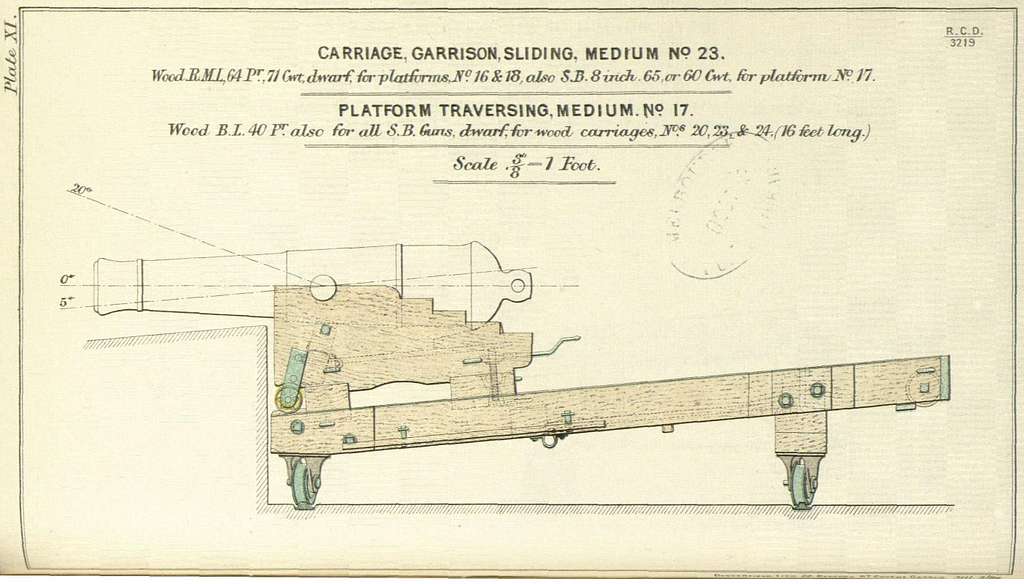
‘A battery has been constructed at Chyandour to represent the fighting deck of a battleship, and is intended for the gunnery instruction of the Naval Reserve attached to the Penzance district; there is one 6in. breech-loader with Armstrong mountings, two 5in. breech-loaders with Vavasour mountings, three 1in. four-barrel Nordenfeldts, one five-barrel Gardiner, a drill shed 60 feet by 50 feet, also a shed for two 9lb. field guns for target practice.’
https://leicester.contentdm.oclc.org/digital/collection/p16445coll4/id/296329

In August 1914, shortly after the outbreak of WWI, the local Press reported that sixty 'aliens' (mainly merchant seamen) had been taken off the German steamer Kronprinzessin Cecile at Falmouth and brought to the barracks in Chyandour for internment as Prisoners of War (PoW's).

After the passing of Sage Ley Bolitho on 10th December 1916, R F Bolitho, dedicated a stained glass window in Gulval Church to her.

Demolition of the tin works

Consolidated tin smelting works, Chyandour
Chyandour Tin Smelting Works
(photographer unknown)

Demolition of Tin Smelting Works, Chyandour
The felling of the chimneys at the tin smelting works at Chyandour
(photographer unknown)
'After the decline in tin mining, the Chyandour Smelting Works was closed down in 1911, with the six tall chimney stacks being felled in 1931.'
https://bolithoestates.co.uk/history-2/

It is probable that the tin smelting operation left highly dangerous deposits (such as arsenic and heavy metals) in the soil, making the site unfit for future development.


Ordnance Survey map - Chyandour  1936
Ordnance Survey map - Chyandour area -  c1936


The Holiday Fellowship

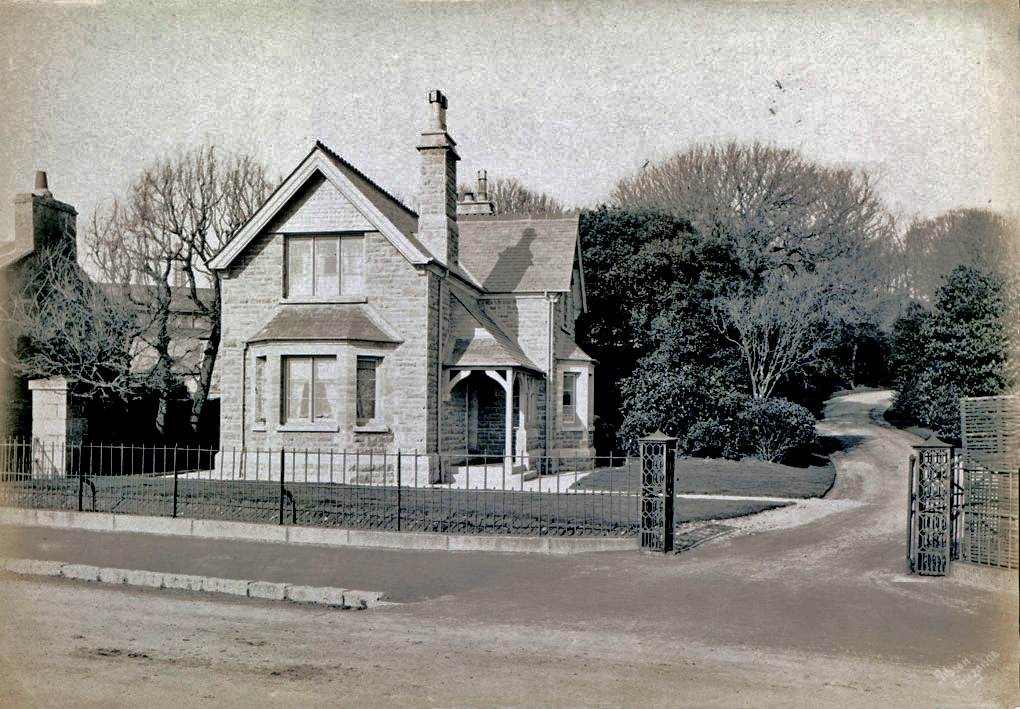
Ponsandane Lodge, Chyandour
(RRPC, Real Photo Postcard)

With the younger R F Bolitho's passing in 1932, the Ponsandane estate was sold off to the Holiday Fellowship, an enterprise intended to benefit underprivileged working class adults and children giving them the opportunity to take a holiday, which was otherwise not possible for them.

Ponsandane  c1936
Ponsandane House
(postcard postmarked 5th August 1936)

'This is a lovely house. This big field at the front of it all belongs to the Holiday Fellowship but they rent it to a Farmer. We have sat out at the front quite a lot as it has been really warm so far. The men are all out the back of the house in stables!'
- written on back of postcard


Ponsandane Coach House
The Annexe, Ponsandane
- built as the Coach House in1899 -
(The Holiday Fellowship Centre postcard - E A Sweetman - P.1352)


View of St. Michael's Mount from Chyandour
View
from Chyandour beach across Mount's Bay to St. Michael's Mount 
(photographer unknown)
Chyandour Battery again proved invaluable during WW2 when it became part of a strategic defence and had an Anti-Aircraft searchlight stationed there to aid the Air Force. However, with the cessation of hostilities, the Battery was demobilised and has since been used by other organisations, such as army cadets, and more recently the National Coastwatch, whose role there is to watch out for boats or individuals in distress in the waters of Mount's Bay.

Giles cartoon featuring St. Michael's Mount, Penzance, Cornwall
(Daily Express 28th August 1951)
The Penzance By-Pass

The A30 road was originally numbered in 1922, with its historic London-to-Penzance route formally established and extended to Land's End by May 1925. The A30 road entered Penzance at Chyandour and continued through town going through Alverton. In time however, traffic volumes grew to the point where consultations were made about dealing with the problem.

Clearly, the road had to pass through multiple people's land, but after getting approval, the £7.5 million project got underway.

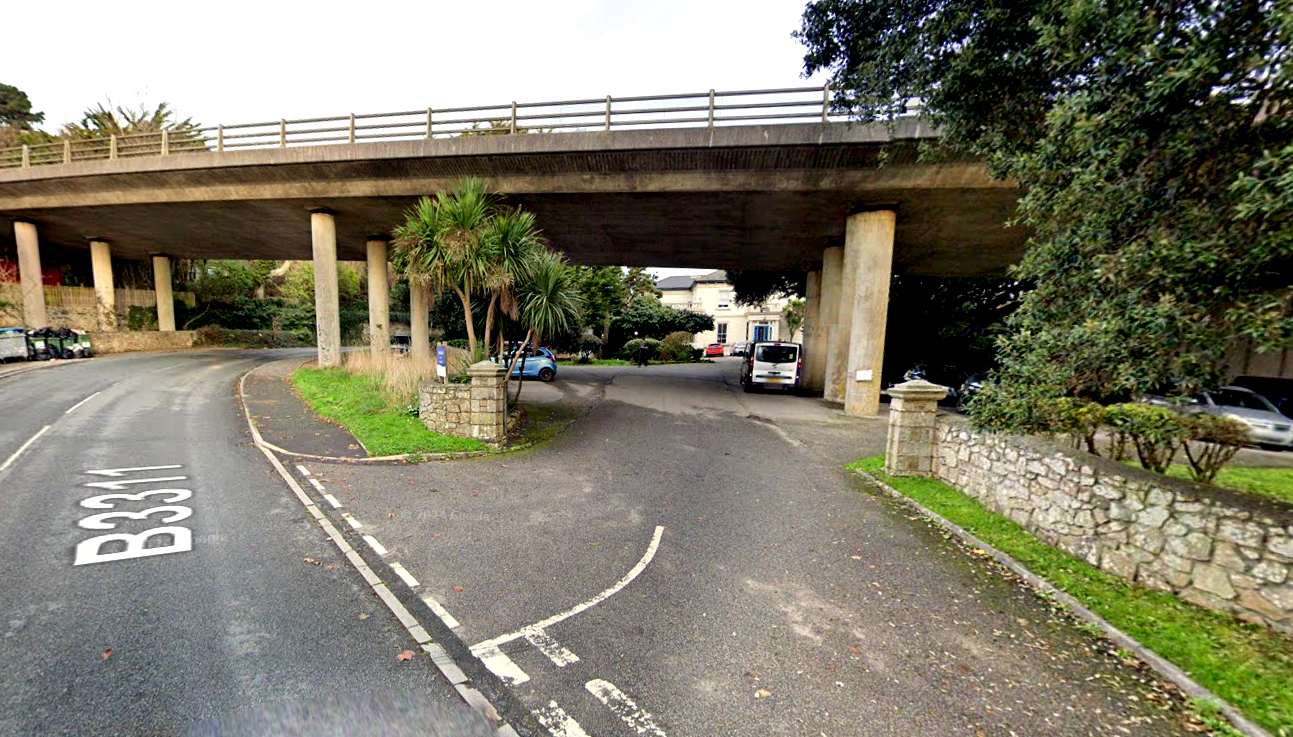
It was also decided to re-route the Gulval road from Chyandour, and in May 1988 a bridge was built over the old road was effected and by utilising the drive running up from Ponsandane Lodge,a short portion of roadway was added to what is now the B3311. The old gateposts that formerly stood at the bottom of the driveway wer being moved closer to Ponsandane House, Traffic  and a barrier was placed at the end of Chyandour Terrace.

Extension of B3311 road at Chyandour
Photo of the building the flyover bridge over the B3311 road - May 1988
(photographer unknown)

Building the Penzance Bypass
Earthworks for Penzance Distributer Road, A30 Bypass
(photographer unknown)
A  new road junction with a roundabout was created at Ponsandane, and the by-pass was opened on 27th January 1989.

Ponsandane estate now had a main road cutting through it, so it was no great surprise when it was put up for sale. The new owner has established a care home, and the field below is now given over to a campsite, and on the other side of Ponsandane Brook, a supermarket., 

Changes in Chyandour Square

According to old Ordnance Survey maps, the two public buildings at the back of the square were once an 'Institute' and a 'Mission Room', but by the mid-1960's the Institute had become a Kingdom Hall.

In the late 1990's the owners of the Kingdom Hall opted to relocate, and so put the property on the market, at which time m
usician Gary Clail got to hear about it:

Gary Clail: '... I picked up the local newspaper after 3 months, and there it was; Kingdom Hall belonged to the uh Jehovah's Witnesses. 50 Grand! [£50,000] Blimey, blimey, let's go and have a look at this place, and coming from a building background I could see it had a brand new roof on it. When I walked into this huge open space, I mean God I just walked in and it was like 57 foot long by 27... 37 foot wide, they had some cloak rooms and an office at the back and a stage where they used to preach from.
I went "I'll buy it" and I bought it..'
Interviewer: 'Just felt right?'
Gary Clail: 'Yeah, and I moved my furniture in and I had my bed on the stage, right? I had this huge couch opposite the end of that, the end of the hall and I had these massive speakers either end of the bed that Adrian [Sherwood] gave me, these old On-U-Sound speakers that look like Aztec Warriors, set it all up and sat there and thought, "Right you got a church, what are you going to do?" I really didn't know and then somehow, some way, I got 30 grand [£30,000] together, right, because I went over to France. I did some gigs as a residency in this nightclub and I saved up for about two years so I was kind of like not paying any tax, not paying any Council Tax, nothing, but I had Planning Permission on it and I met Bob - Irish lad - the Builder, right go for true and yeah and he went "How much have you got?" I said "15,000" and he went "It's a 30 grand job Gary" and I went went "Well I've only got 15,000, let me think about it", anyway cut a long story short, he did it, put bedrooms up there, then I met up - and being Gary - I met people in Cornwall; "Oh you want to advertise it, in the whatever, you want to advertise it, do B&B, do B&B."
So I had like four double letting rooms and uh next thing and I'm packed with Surfers.'

https://www.youtube.com/watch?v=JUZfUPVK0F0 (at 14:55 to 17:20 appx.)

Nowadays Chyandour is largely residental; even parts of the Bolitho Estate Office have been converted into flats, but the area still attracts new businesses. In addition to
the bed and breakfast accomodation available in Chyandour Square and the home fuel suppliers at the top of Chyandour Coombe, various other services are to be found locally, such as  a chiropractor, a physiotherapist, and a podiatrist, even a used-car garage, and a potter's studio.

Acknowledgements: 

Grateful thanks to Dave Puddifoot, Steve Prescott, Jonathan Symons, Jonathan Warner and Pat Ayotte for sharing images with me.

..........................................................................................................................................................................................

Links:

Alverton: West of Penzance (a history)  https://paulmason.info/Alverton/history.htm

History of Old Hayle  https://paulmason.info/Hayle/Hayle.html


free hit counter